A safe youth athletic training program for beginners should build movement confidence, coordination, and enjoyment before it asks children to train harder or compete. Parents can choose well by checking coaching quality, age-appropriate progression, supervision, recovery practices, and whether the schedule fits the child and household.
What should parents look for before choosing a beginner athletic program?
Parents should choose a beginner program that teaches broad movement skills in a supportive setting rather than emphasizing early specialization or intense competition. Families often begin researching youth athletic training programs because a child wants an organized activity, needs more confidence moving with peers, or would benefit from a positive group routine that supports general fitness.
Look for activities that develop balance and coordination, mobility, basic strength, and endurance through games and age-appropriate drills. Ask about group size, qualified coaches, session length, equipment, communication with families, and how instructors adapt activities for children with different skill levels. The best fit also reflects the child’s schedule, current activity level, comfort with groups, interests, and willingness to participate.
Start with the child’s reason for joining
The child’s reason for joining should guide the program choice. A child seeking confidence may need playful skill practice and encouragement, while a child looking for a group routine may value consistent sessions and cooperative games. We recommend asking what the child hopes to try, then choosing a setting where participation feels meaningful rather than forced.
Match the program to age, readiness, and interests
A beginner athletic training program should match instructions, equipment, intensity, and session length to the child’s development and readiness. Ask whether coaches welcome children with little experience and can modify running, jumping, throwing, or balancing activities. A program connected to the child’s interests is more likely to support regular participation and an active lifestyle.
How can a youth training program build skills without pushing beginners too hard?
A youth program can build athletic ability safely by moving from simple patterns to more complex drills in small, understandable steps. Coaches should first teach running, jumping, landing, throwing, catching, balancing, and changing direction, then combine those skills in playful activities.
Clear demonstrations, short instructions, repeated practice, and friendly challenges help children learn without feeling overwhelmed. Children should have opportunities to work, recover, drink water, ask questions, and adjust an activity. A coach can change distance, speed, balance demand, resistance, or rest time instead of treating every child as if they have the same capacity.
Use movement foundations before sport-specific drills
Movement foundations should come before demanding sport-specific patterns because they give beginners the control needed to participate safely. A coach might practice soft landings, stopping under control, changing direction, or catching a large ball before adding speed, smaller equipment, or competitive rules. This approach supports balance and coordination across many activities.
Increase challenge gradually
Challenge should increase through one manageable change at a time, such as a slightly longer distance, a new direction, or a shorter but still comfortable rest interval. Coaches should watch form, attention, breathing, and willingness to participate before progressing. If a child becomes confused, unusually tired, or uncomfortable, returning to an easier version is the appropriate adjustment.
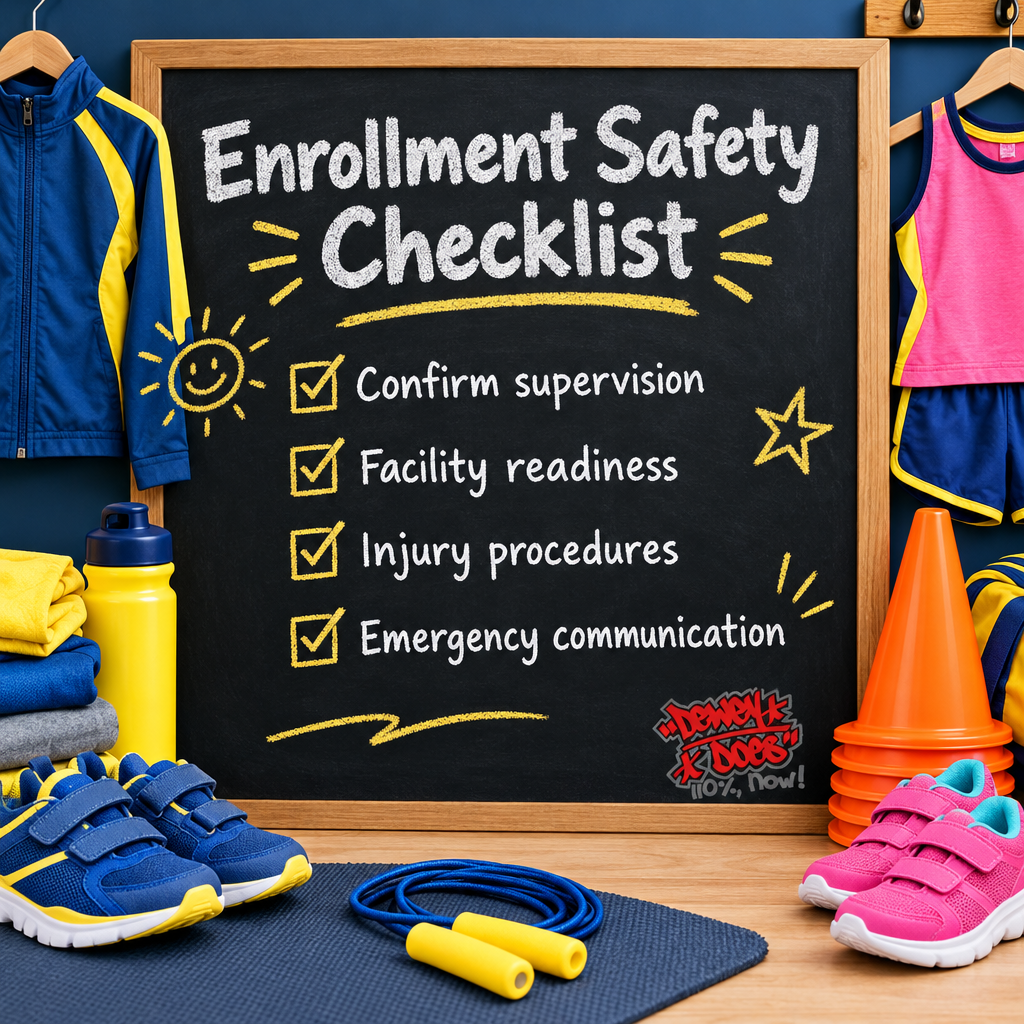
A safe program should explain supervision, facility conditions, equipment checks, first-aid readiness, emergency contacts, and how families report pain or injury before enrollment. Parents should ask how much attention coaches can give each child, how instructors respond to illness or heat, and what happens when a child needs a modification.
A suitable session generally includes a gradual warm-up, skill practice, active games or drills, recovery periods, hydration opportunities, and a calm cool-down. Coaches should never encourage children to ignore pain, compete through injury, or treat exhaustion as proof of success. Families should seek appropriate medical guidance when a child has health concerns and share relevant information with the program.
Supervision and emergency readiness
Active supervision means coaches can see, hear, and respond to children throughout the session. Before enrollment, ask how emergency contacts are maintained, how injuries are handled, whether staff know the facility’s emergency procedures, and how parents are notified. Clear answers show that safety is part of the program’s daily practice rather than an afterthought.
Warm-ups, rest, hydration, and injury prevention
Warm-ups should prepare children gradually, while rest and hydration should appear throughout the session rather than only at the end. Ask how coaches modify activities for fatigue, discomfort, weather, or illness. Children need permission to pause and speak up, and repeated pain or unusual fatigue deserves a conversation with the coach and, when appropriate, a health professional.
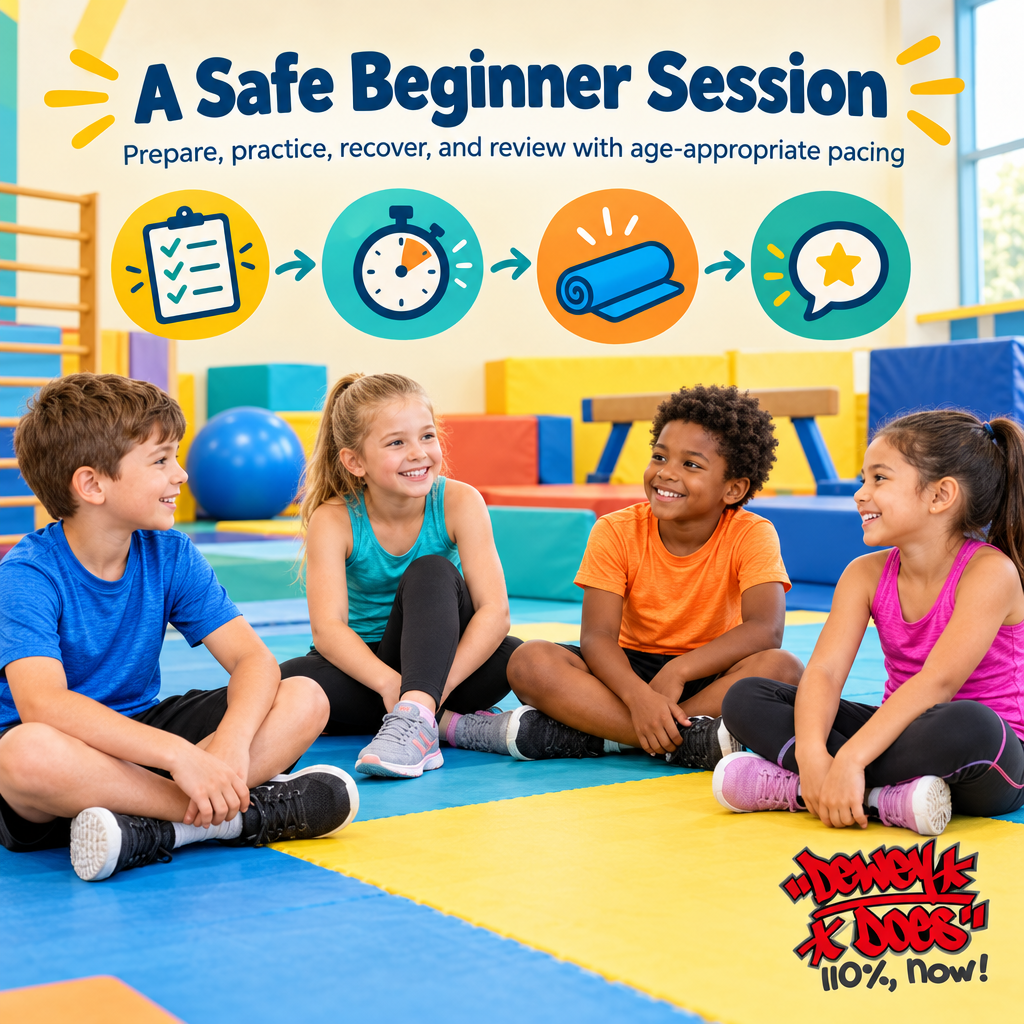
A safe beginner session follows a predictable sequence while allowing the coach to adjust intensity, rest, and equipment for the group. Frequency and duration should reflect age, other activities, school demands, sleep, and recovery rather than a fixed rule for every child.
A simple session structure
Parents can judge a session by watching whether the coach explains each phase and whether children remain engaged without appearing overwhelmed. Comfortable clothing, suitable footwear, water, weather-appropriate adjustments, and planned rest all support participation. Progress may appear as better focus, coordination, willingness to try, and enjoyment, not only faster times or heavier resistance.
- Prepare: The coach checks attendance, footwear, equipment, weather, and any relevant concerns. Children should know what will happen, and parents should see that the setup is orderly.
- Warm up: The coach leads easy movements, mobility work, and simple games. Children should gradually become active without immediate exhaustion; calm breathing and controlled movement are useful checkpoints.
- Teach skills: The coach demonstrates one movement and gives brief instructions. Children should have time to watch, ask questions, and try without pressure.
- Practice: The coach adjusts distance, speed, balance demand, or equipment. Parents should see modifications available when a drill is too easy, confusing, or difficult.
- Condition playfully: Games add short bursts of running, throwing, jumping, or changing direction. Children should have recovery intervals and access to water instead of being pushed continuously.
- Recover: The coach reduces activity with walking, gentle movement, breathing, and a calm cool-down. Children should finish settled enough to listen and leave safely.
- Follow up: The coach shares useful observations or next steps with parents. Families can ask whether the child participated comfortably and what adjustment may help next time.
How to check that the plan is working
After several sessions, ask whether the child understands the instructions, feels safe, enjoys the activities, and recovers comfortably. Look for gradual improvement in balance, coordination, focus, and willingness to try. A plan needs review if the child repeatedly reports pain, dreads attendance, seems unusually fatigued, or faces activities that exceed current readiness.
How should parents compare program quality, schedule, and total family commitment?
Parents should compare coaching, safety communication, class size, travel, cost information, equipment needs, cancellation terms, and schedule flexibility together. A lower-cost option may require more equipment or travel, while a convenient schedule may not suit a child who needs more recovery between structured activities.
During a visit, notice whether coaches use respectful language, welcome questions, offer modifications, and praise effort and learning instead of ranking children by performance. Ask what the fee includes, such as instruction, facility access, basic equipment, progress communication, or take-home guidance, and confirm every detail with the provider. Comfortable children’s activewear and kids’ sports apparel can support movement, but clothing complements qualified instruction rather than replacing it.
Questions to ask during a visit or introductory call
Ask how coaches adapt drills, manage pain or fatigue, supervise the group, communicate progress, and respond to weather or illness. Also ask about session length, rest opportunities, equipment, footwear, attendance expectations, cancellation terms, and total costs. We recommend asking what a first session looks like and how the provider welcomes children who have never trained before.
Signs the program fits the household
A program fits when the child’s interest, schedule, travel time, recovery needs, and family budget can work together without constant strain. The child should understand the expectations and feel comfortable asking for help. Parents should also feel that communication is clear, safety questions receive direct answers, and the program encourages participation without pressure to compete.
What should parents do after choosing a youth athletic training program?
Parents should prepare the child with clear goals, relevant health information, emergency contacts, water, suitable clothing, supportive footwear, and enough arrival time to settle in. A short conversation with the coach can prevent confusion and help the instructor choose appropriate activities.
After several sessions, ask whether the child feels safe, understands the instructions, enjoys the activities, recovers comfortably, and wants to continue. Repeated pain, unusual fatigue, anxiety before sessions, unclear supervision, pressure to compete, or activities that do not match readiness are reasons to pause and discuss the situation. Families looking for encouragement at home can browse Dewey Does children’s activewear, books, and educational materials. Every purchase supports the Dewey Does Foundation’s work promoting literacy and active lifestyles for children.
Prepare for the first session
Write down the child’s goals, relevant health information, emergency contacts, and questions for the coach. Pack water, comfortable movement-friendly clothing, suitable footwear, and any requested equipment, then arrive with enough time for introductions. The first session should feel like a chance to learn the routine, not a test of athletic ability.
Review progress and reassess fit
Review the program regularly with the child and coach instead of judging progress only by speed or strength. Better coordination, focus, confidence, recovery, and enjoyment are meaningful signs. If concerns continue after a respectful conversation, pausing or finding a better-matched program may protect the child’s health and motivation.
Frequently Asked Questions
What age is appropriate for a youth athletic training program?
There is no single age that fits every child. A beginner program should match activities, instructions, session length, and intensity to the child’s developmental stage, comfort, and readiness. Parents should ask how coaches adapt drills for different abilities and whether the program welcomes children with little prior experience.
What should a beginner wear to youth athletic training?
Children generally need comfortable clothing that allows unrestricted movement, supportive footwear suited to the activity, and access to water. Confirm facility-specific clothing or equipment requirements with the provider. Activewear can help children feel prepared, but it does not replace safe coaching, qualified supervision, or appropriate instruction.
How often should a beginner attend athletic training?
The right schedule depends on age, activity level, other sports, school demands, sleep, and recovery. A suitable program leaves room for rest and free play instead of filling every day with structured training. Ask how the provider manages progression and what signs indicate that a child needs more recovery.
What are warning signs of an unsafe youth training program?
Warning signs include unclear supervision, missing emergency procedures, pressure to train through pain, excessive intensity, confusing instructions, little water or rest, and an emphasis on winning over learning. Parents should also question programs that cannot explain how they modify activities for beginners or respond to injuries.
How can parents tell whether a youth athletic program is working?
#YouthSportsSafety #DeweyDoes #KidsPlay #Safetyfirst #LifeisaSport #StopYouthBullying